

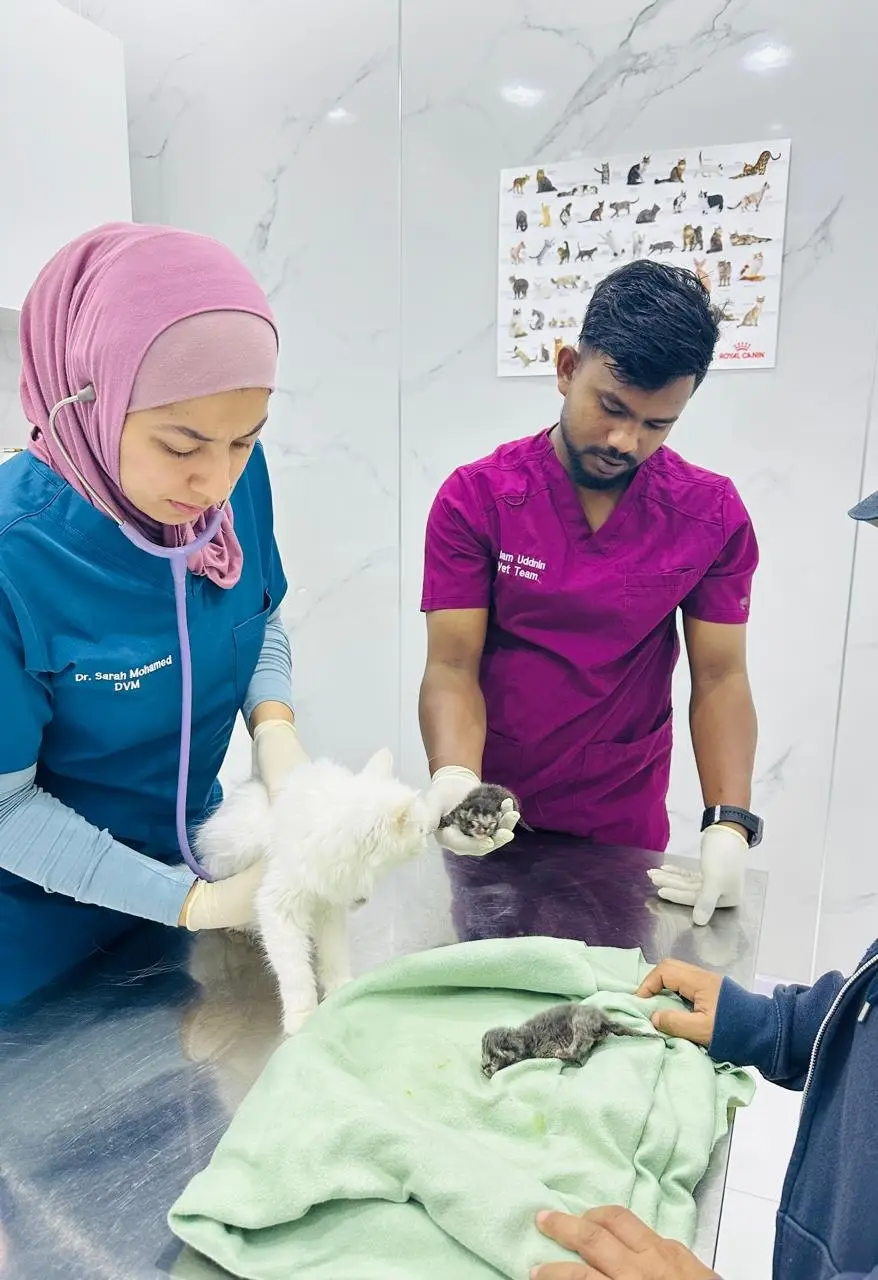
Ultrasound can confirm pregnancy from about day 25 after mating in dogs and a few days earlier in cats. An x-ray can count the litter once the skeletons have mineralised, from about day 45, and it is most accurate in the last week before the birth.
Both species carry for about nine weeks. Dogs average 63 days from ovulation. Cats average 63 to 65 days from mating. If you did not see the mating, the vet estimates the stage from the scan itself.
The timeline
| Days after mating | What can be checked | What it tells you |
|---|---|---|
| Before day 20 | Nothing reliable | Too early. A scan now cannot rule pregnancy out |
| Day 20 to 30 | Ultrasound | Fluid sacs, then embryos with a visible heartbeat. Pregnant, yes or no |
| Day 30 to 45 | Ultrasound | Growth, heartbeats, an estimate of the due date |
| Day 45 to 55 | X-ray becomes possible | Spines and skulls appear. A first count |
| Day 55 to term | X-ray | The most reliable count, and the size of the young against the pelvis |
The days are approximate. Dogs can conceive several days after a mating, because sperm survive in the female. A scan at day 25 after mating may therefore show a younger pregnancy than expected. A negative early scan is repeated a week later before anyone calls it final.
What ultrasound does, and its limit
Ultrasound is the test for confirming pregnancy and for checking that the young are alive. From the fourth week, each heartbeat flickers on the screen. Later scans show movement. A heart rate that is slowing in late pregnancy warns of distress.
The scan is done awake. Your cat or dog lies on her side or back for 10 to 20 minutes, and a patch of belly fur is clipped. It is painless, and there is no radiation.
Ultrasound is poor at counting. The probe sees one slice at a time, and the womb's two horns fold over each other. It is easy to count the same puppy twice or to miss one behind another. With three or fewer the count is often right. With six or more, treat the number as a rough guide.
What the x-ray adds
One x-ray shows the whole abdomen in a single frame. Once bone has mineralised, the vet counts skulls and spines. The count is right most of the time, and large litters can still hide one.
Knowing the number has a practical use. During the birth, you know when she has finished. If four were counted, three have arrived and two hours have passed, that is a reason to call.
The x-ray also shows whether one puppy or kitten is unusually large, and how the heads compare with the mother's pelvis. For a single large puppy in a small bitch, the vet may advise a planned caesarean.
Owners ask about radiation. A single diagnostic x-ray late in pregnancy uses a low dose, and the organs of the young are already formed. Most pregnant animals lie still for one side-on picture without sedation. The details of both tests are on our x-ray and ultrasound page.
Signs at home are unreliable
Pink, enlarged nipples show in cats from about the third week. Weight gain and a rounder belly follow from week five. None of these proves pregnancy.
Bitches commonly have a false pregnancy six to eight weeks after a season. They produce milk and build a nest with an empty womb. A swollen belly in an unspayed female can also be a womb infection. If she is drinking heavily, off her food, or has a discharge, read about pyometra and have her seen the same day.
Feeling for the young by hand works only in a short window around the fourth week. It should be done by a vet, because pressing too hard can harm the pregnancy.
Why unplanned litters are common in the UAE
Cats cycle all year here
In cooler countries, female cats stop cycling in the short days of winter. Winter days in the UAE stay longer than in northern countries, and indoor cats live under electric light until late evening. Many queens here come into heat in every month of the year.
A female kitten can conceive from about four months of age. A queen can come back into heat within weeks of giving birth, while she is still nursing. Cats ovulate in response to mating, so a single escape through an open door is often enough.
How it happens in practice
- Brother and sister kittens adopted together and not neutered by five months.
- An indoor female in heat who slips out to the community cats in the car park.
- A rescued street cat who was already pregnant when she came indoors.
- A dog in season meeting an entire male in a shared building garden or at day care.
If a mating was not planned, call within the first days. The vet will explain the options, which depend on the stage and on her health. Those choices narrow with every week, so an early scan matters. Afterwards, spaying prevents the next litter. The vet will advise when it can be done after kittens are weaned.
Breeds that need a plan before the due date
French Bulldogs, English Bulldogs, Pugs and Boston Terriers have large heads and narrow pelvises, and a high share of their litters are delivered by caesarean. Chihuahuas and Pomeranians carrying one or two large puppies are also at risk. Persians and Exotic Shorthairs have more difficult births than other cats.
For these mothers, the late x-ray is part of birth planning. Agree a plan with the vet in week seven or eight. It should cover when to call and which signs mean surgery. It should also cover where to go if labour starts after midnight, when our doors are closed but the phone is still answered.
Looking after her through the heat
A heavily pregnant dog overheats faster than usual. From May to October, walk her only in the early morning and after dark, and keep walks short in the final two weeks. Pregnant cats should stay indoors with the air conditioning on and the balcony shut.
Book the scan for a cooler hour and bring her in a pre-cooled car. Do not give any worming product, flea product or medicine during pregnancy without asking the vet first. Set up the birthing box in a quiet room at least a week ahead.
When to call
Book a scan on WhatsApp from day 25 after mating, or as soon as you suspect a pregnancy and do not know the date. Call 055 620 4085 straight away for any of the following. The phone is answered 24 hours, and the clinic is open 8 AM to 12 AM every day.
- Strong straining for 30 minutes with nothing delivered.
- More than two hours between deliveries when more are expected.
- Green or dark discharge before the first puppy or kitten has arrived.
- Heavy bleeding, collapse, or a mother who seems exhausted and has stopped trying.
- A pregnancy that has passed day 66 with no sign of labour.
- Any pregnant animal that stops eating, vomits repeatedly or has a foul discharge.